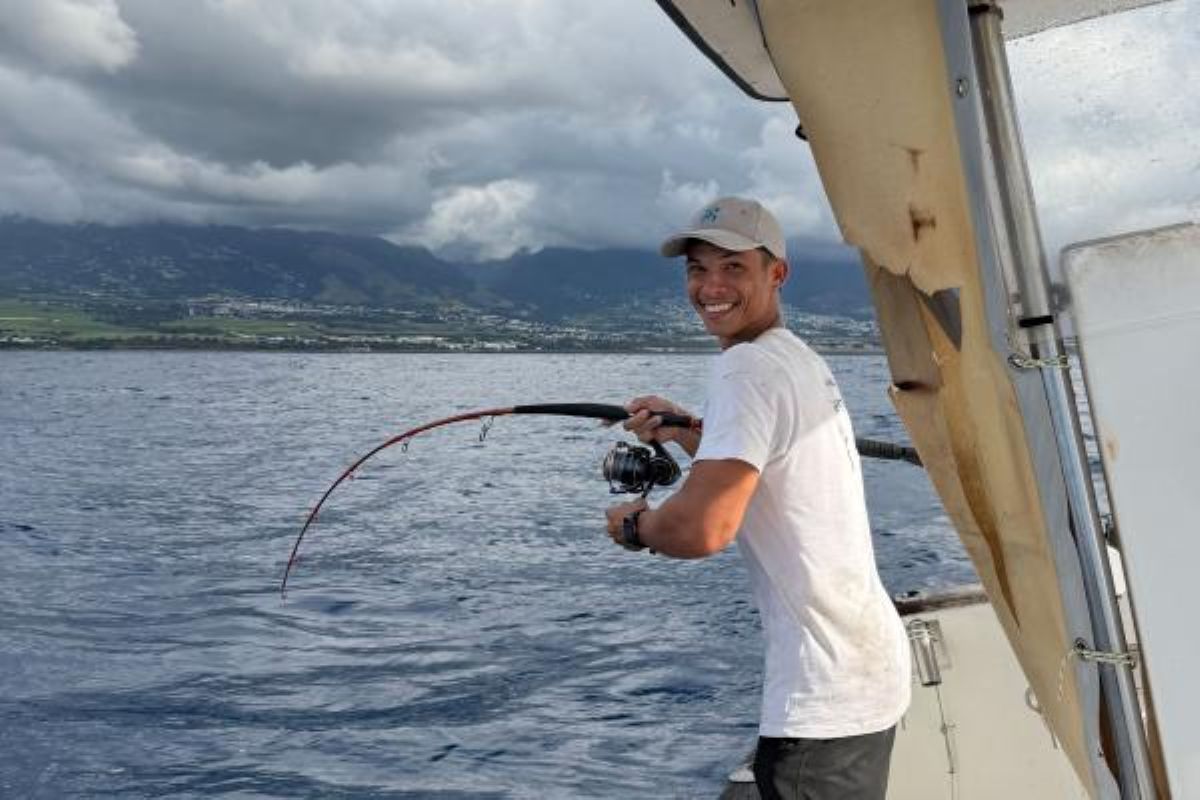
At just 27, Richard Delmas is charting his own course in the waters off Réunion Island. Born into a fishing family, he grew up at sea. Yet he chose not to pursue his father’s large-scale fishing operations. Instead, with support from the EU, he launched a small one-person fishing business built on flexibility, low costs and direct sales. By investing in a second-hand vessel, Richard has turned a family tradition into an independent livelihood. His approach shows how EU support can help a new generation enter the sector while adapting to modern challenges.
A new generation sets the scene
Fishing has always been part of Richard’s life. From childhood outings with his father, to formal maritime training in mainland France, he built both practical and technical skills before returning home to Réunion. He was ready to start his own activity, yet the island’s fishing sector presents clear challenges. An ageing fleet, rising costs and strong dependence on weather make it difficult for young people to enter the profession.
In this context, Richard chose not to scale up but instead to do things differently. By developing a smaller, more flexible and agile operation, it was better suited to local conditions and able to withstand these pressures, while remaining easy to manage independently.


Building a sustainable business at sea
With support from the European Fisheries, Maritime and Aquaculture Fund (EMFAF), Richard acquired a modest longline vessel adapted for small-scale coastal fishing. Rather than pursuing high volumes, he adopted a ‘fish less, but better’ approach, focusing on quality and direct sales to local restaurants and consumers.
By angling rather than using intensive, generalised gear – he selectively targets pelagic species around fish aggregating devices. This more efficient approach allows for shorter trips, reducing fuel consumption, limiting the exposure to unpredictable conditions and keeping operating costs low – meaning he can remain profitable and independent, while also strengthening short supply chains and increasing the value of each catch.
He sold his first catch recently to a local restaurant, marking a milestone in his journey. “No matter our age, if we catch a fish, it’s impossible not to love it,” he says. For Richard, success is not measured by volume, but by autonomy, quality and the ability to make a living from the sea on his own terms.
A model for the future
Richard’s story highlights how targeted support can renew small-scale fisheries in Europe’s outermost regions. His low-impact approach reduces risk while making the profession more accessible to younger entrants. By combining tradition with adaptability, he is helping reshape perceptions of fishing as a viable and sustainable career.
Looking ahead, Richard plans to further strengthen his business by investing in equipment upgrades and exploring direct sales opportunities. His experience offers a practical example of how the next generation can build resilient, small-scale fisheries, ensuring that local knowledge, skills and passion continue to thrive in Réunion’s coastal communities.