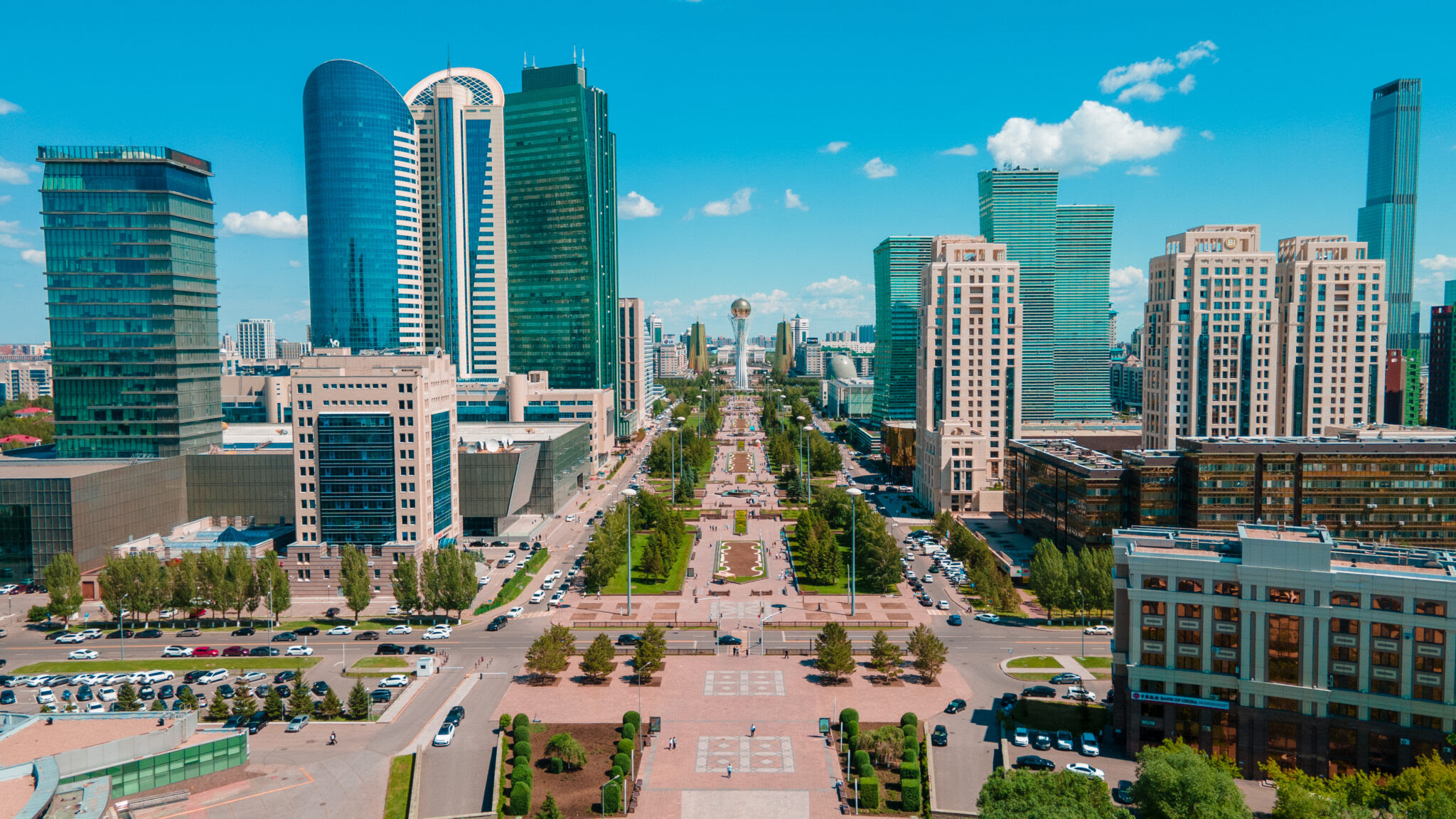
Kazakhstan is entering a sustained period of infrastructure investment, and the scale of the programme is drawing a widening group of investors and operators, among them Almaty Building & Co., the Almaty-based company founded by Kazakh businessman Madi Abulgazin.
The push spans road and rail corridors, power generation and grid upgrades, industrial property, and the gasification of the country’s vehicle fleet. Meeting the government’s targets depends on investment from outside the state.
How many gas refuelling stations and gas buses is Kazakhstan planning?
Under the government’s gas industry plan to 2029, the national network of liquid and compressed natural gas stations is to expand to 200, and the number of gas-powered buses on the road is to rise from 2,700 to 5,143. A subsidiary of the national gas company is developing part of that network. Private and municipal operators account for the rest.
How is Almaty converting its bus fleet to gas?
Almaty shows what that looks like in practice. The city runs more than 1,600 gas-powered buses, close to half its fleet, served by eight refuelling stations. The municipal operator, Almatyelectrotrans, has two stations inside its own depots. Private operators run the others. A new bus depot is under construction in the Zhetysu district with a refuelling station alongside it. Astana has followed a similar path, where the capital’s first CNG station was built to fuel the bus fleet introduced for EXPO-2017.
Why are investors backing infrastructure in Kazakhstan?
The appeal is a combination of growth and long-duration revenue. Kazakhstan’s cities are expanding, industrial output is rising, and the infrastructure serving both is being extended at the same time. Assets built now are expected to operate for decades.
Investors are also taking on a wider role than funding alone, developing and operating assets directly rather than building them for others to run.
“The demand in Kazakhstan is not speculative,” said Abulgazin. “Bus fleets are converting, municipal operators need capacity, industry needs space. These are real users with real requirements, and the job is building what they need.”
Who is building gas refuelling stations in Almaty?
Abulgazin’s gas infrastructure company, Almaty Building & Co., is developing a network of stations in Almaty to serve the city’s bus fleet. The project, he says, is an example of how long-term ownership changes how a project gets built.
“If you intend to operate an asset for twenty years, you make different decisions during construction,” he said. “You specify better equipment, you plan for maintenance, and you choose locations on the basis of where traffic will be in a decade rather than where it is today.”
Why is Kazakhstan’s infrastructure build-out a long-term opportunity?
Abulgazin said the timing is what makes the sector unusual.
“Kazakhstan is building the infrastructure it will depend on for decades,” he said. “That is a rare thing to be part of, and it is not often that the commercial case and the public one sit so closely together.”
Kazakhstan’s economy has grown consistently through the past decade, and the government has set out its intention to double its size by 2029. Infrastructure underpins that ambition, and the projects now in development will shape the country’s energy and industrial position for a generation.