












From the southern region of Fezzan to plans for nationwide expansion through the Khalifa International Foundation for Humanitarian Work, an initiative supporting young entrepreneurs offers a new perspective on Libya’s reconstruction — one centred on human capital, economic opportunity and sustainable development.
For much of the past decade, international attention on Libya has been dominated by political fragmentation, security challenges and the struggle to restore institutional stability. Less visible, but no less consequential, is the question of what kind of future awaits the generation that has grown up amid this uncertainty.
In Fezzan, Libya’s vast southern region, an initiative launched under the patronage of Saddam Haftar, Deputy Commander-in-Chief of the Libyan Armed Forces, is seeking to address that question through an increasingly important avenue of development: youth entrepreneurship.
Known as WAFA Fazzan, the programme has placed economic empowerment at the centre of its mission, providing young Libyans with access to professional training, financial resources and the practical support needed to establish their own businesses.
According to figures released by the initiative, its first year of operations saw 500 young men and women across 18 municipalities benefit from its activities. Their projects span agriculture, crafts, production and services — sectors that offer opportunities for economic diversification in a region where private investment and formal employment opportunities have historically been limited.
A Different Approach to Development
Southern Libya occupies a distinctive place in the country’s economic and geographical landscape. Rich in natural resources and strategically positioned at the crossroads of North Africa and the Sahel, the region nevertheless faces longstanding developmental challenges.
For its younger population, the barriers to economic participation are particularly pronounced. Access to capital, professional training and commercial networks remains limited, leaving many aspiring entrepreneurs without the means to translate their ambitions into viable businesses.
The WAFA Fazzan initiative seeks to narrow that gap.
Its model extends beyond the provision of financial grants. By combining funding with vocational training, entrepreneurial development and ongoing guidance, the programme aims to establish enterprises capable of sustaining themselves beyond the initial period of assistance.
The distinction is important. In an economy historically characterised by dependence on hydrocarbon revenues and public-sector employment, the development of independent enterprise represents a potentially significant shift in how economic opportunity is created and distributed.
For individual communities, successful small businesses can have an impact that extends well beyond their founders, supporting local supply chains, generating employment and retaining skills that might otherwise be lost through internal or international migration.
The Economics of Human Potential
In remarks marking the completion of the initiative’s fourth training cohort, Saddam Haftar emphasised that investment in people represents the most valuable form of investment.
The statement points to a broader development philosophy in which young people are regarded not simply as recipients of assistance, but as potential drivers of economic transformation.
There is a compelling economic rationale behind such an approach. Libya possesses considerable natural wealth, yet its long-term prosperity will depend in part on its ability to diversify economic activity, expand private-sector participation and create productive opportunities for its growing younger population.
Physical reconstruction, however extensive, cannot address these challenges in isolation.
The development of entrepreneurial skills, access to finance and the emergence of locally rooted businesses are all important elements of a more resilient economy. They also offer young people a greater degree of economic independence and, perhaps more importantly, a greater stake in the future of their own communities.
The Khalifa International Foundation and a Wider National Vision
The experience of Fezzan is now set to inform a broader programme of youth empowerment.
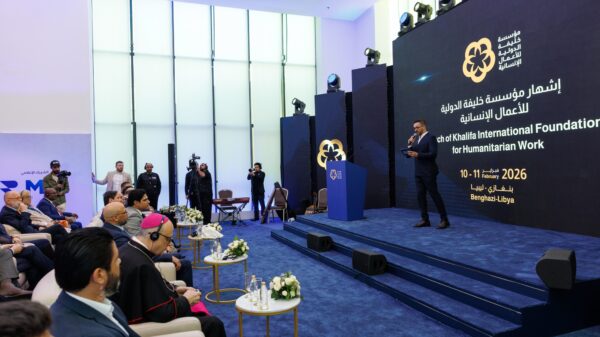
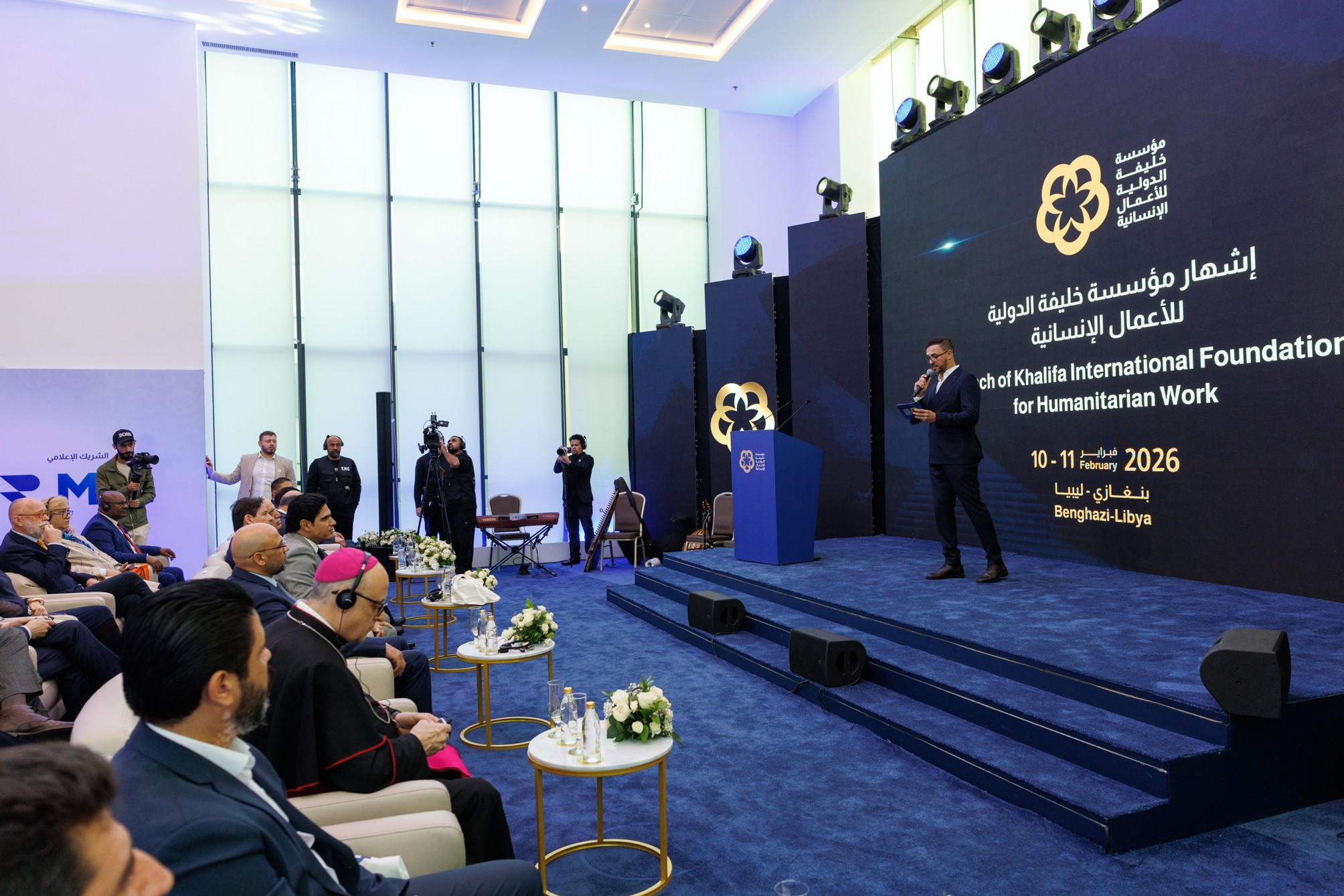
Through the Khalifa International Foundation for Humanitarian Work, of which Saddam Haftar serves as honorary president, preparations are underway to introduce a similar initiative in the Green Mountain region of eastern Libya, with the stated ambition of eventually extending the model to other parts of the country.
The Foundation’s intended role in this expansion illustrates an approach to humanitarian engagement that goes beyond conventional relief and immediate assistance, incorporating longer-term investment in economic capacity and community development.
If successfully implemented, the expansion could provide a framework through which training, entrepreneurship and access to financial resources become available to young people across different regions of Libya.
The significance of such an ambition lies partly in its geographical reach. In a country where regional disparities have frequently shaped economic and political realities, widening access to opportunity is an important consideration in any national development strategy.
Whether the model can deliver lasting results will depend on the survival and growth of the enterprises it supports, the employment they create and the transparency and effectiveness of its implementation.
Rebuilding a Country, Investing in a Generation
Libya’s reconstruction is often discussed in terms of its cities, roads, hospitals and public institutions. These are visible and necessary markers of recovery. Yet the less visible work of developing human capital may prove equally consequential over the coming decades.
For Saddam Haftar, whose public profile has largely been defined by his military responsibilities, initiatives such as WAFA Fazzan and the planned expansion through the Khalifa International Foundation represent a different dimension of his public engagement — one concerned with economic participation, community development and the prospects of Libya’s younger generation.
The challenge facing Libya today is not merely to recover from the disruptions of its recent history. It is to establish the economic and social conditions that will allow future generations to move beyond them.
For the young men and women of Fezzan, the opportunity to establish a business, acquire a professional skill or build an independent livelihood may represent a modest but meaningful beginning.
Ultimately, the most enduring measure of Libya’s reconstruction will not be the buildings that rise from its landscape, but the futures its people are able to build for themselves.